

Why people don't listen
The reason brilliant people sound forgettable (and what to say instead)

Most people can tell you what they do.
Many can tell you how they do it.
But very few can tell you why anyone should listen.
Not in a slogan way. In a human way.
The result is that they sound correct. Competent. Accomplished.
And completely forgettable.
When brilliance isn’t enough
This week I spoke to someone who wanted more speaking opportunities.
She was brilliant.
She had the case studies. The frameworks. The domain expertise. When she talked about her work, you could tell she knew what she was doing. The confidence was earned, not performed.
But twenty minutes into our conversation, I realised that I still didn’t know why it mattered.
And more importantly, I didn’t know why I should care.
Not because she wasn’t credible. She was. Not because her work wasn’t impressive. It was.
Because she hadn’t given me a reason to attach her knowledge to her. The expertise was there. The person behind it wasn’t.
And without that connection, she was just another competent professional in a field full of competent professionals. Respected, maybe. But not remembered.
The architecture of forgettability
Most professionals are trained to communicate in two dimensions.
What I do. I’m a leadership consultant. I run operations for scaling businesses. I design organisational systems that help teams function better.
How I do it. I use data-driven frameworks. I prioritise clarity and alignment. I focus on sustainable growth over quick fixes.
That’s competence. And competence matters.
But recognition—the kind that makes people seek you out, remember your name, trust your judgment—comes from a third dimension that almost no one talks about.
Why I care. Why this matters to me specifically. Why my perspective is shaped the way it is. What I’ve seen that I can’t unseen.
That’s conviction. And conviction is what separates remembered from respected.
Simon Sinek built an entire framework around this. “Start with Why” has become shorthand for how great leaders and organisations inspire. He’s right. The why is what creates loyalty, trust, and differentiation.
But here’s what’s interesting: most people apply this to companies and products. Very few apply it to themselves.
Your why isn’t just a leadership principle. It’s your signal in a marketplace of sameness.

The credentials trap
Here’s what I’ve been seeing more and more in the work I do.
The people I work with take satisfaction in their work going unnoticed. They don’t need someone to pat them on the back and tell them they’ve done a good job. They’re senior enough to know when their work is good, and reflective enough to know how to improve when required.
This creates a trap.
Not only does it mean their work can go unnoticed in an organisation, it also means they’re not building up any narrative about why what they’re doing matters.
And that shows up in all the expected ways. Promotion cycles. Pay rises. Recognition.
Is this sounding familiar?
If you have a good manager, you might get away with it. A manager skilled enough to notice unspoken work. To advocate for you. To translate quiet competence into organisational currency.
But what about when it comes to moving jobs? Or doing something different? Becoming a speaker, like my friend above.? Adding portfolio work? Getting a board seat? Whatever it is.
There will come a time where your ambitions extend your current reality.
And that’s where relying on what you’ve done, quietly and unassumingly, trips you up.
Because you’ve been storing up case studies like a squirrel storing nuts for winter. But you haven’t been building the narrative about why you do what you do. Why you see things the way you see them. Why someone should choose you over the twenty other people with similar credentials.
I know because I did this.
I spent years doing good work, quietly. Assuming it would speak for itself. And when I decided to step outside that comfortable structure, I realised I had no idea how to talk about what made me different.
So I spent a year working it out. What I was actually good at. Why that mattered. Why my perspective was mine.
It was hard. Harder than it needed to be. And completely avoidable.
With just a small shift in perception and action, you can start working out and showcasing what makes you different now. Before you need it. Before your ambitions outgrow your current reality and you’re left scrambling to articulate something you should have been building all along.
Your unfair advantage
Expertise is abundant.
There are thousands of people who know what you know. Who have similar credentials. Who could do what you do, maybe even in a comparable way.
What isn’t abundant—what can’t be copied, replicated, or commoditised—is the life that led you there.
Your why is your unfair advantage. It’s the rarest part of your signal.
Because even if everyone on the planet started articulating why they care, the chances of yours being the same as someone else’s are infinitesimally slim.
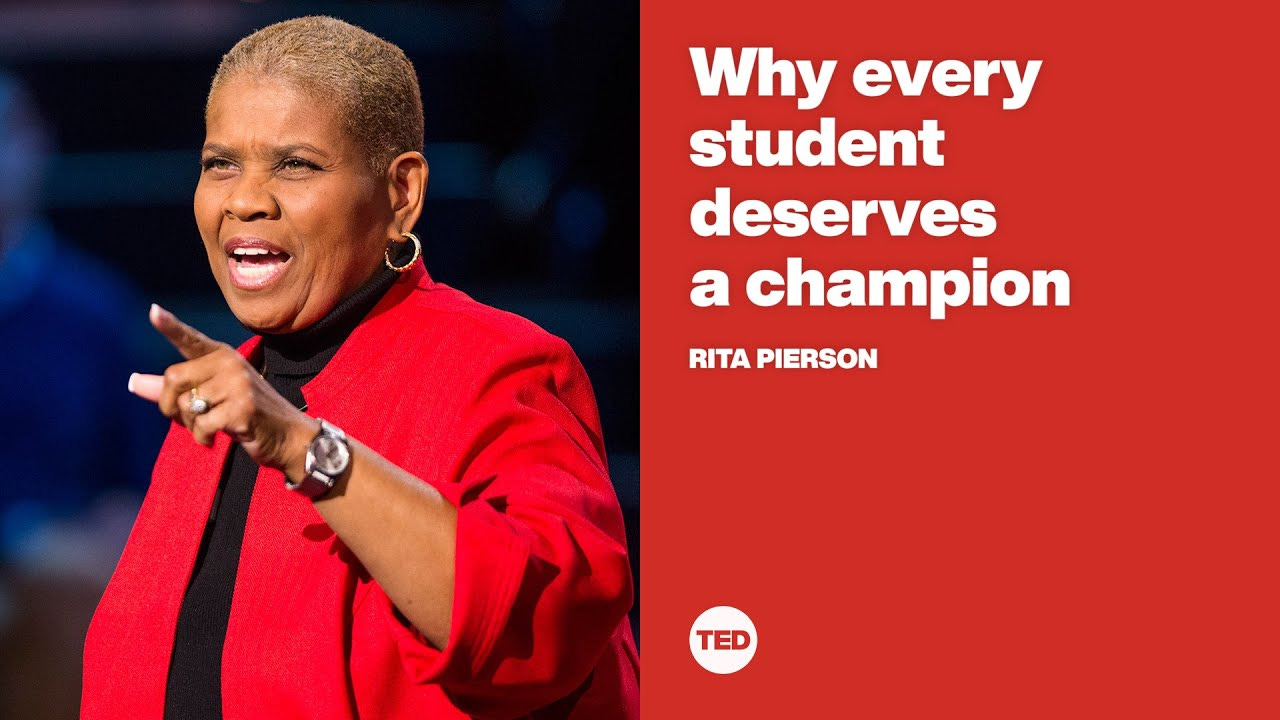
Consider Rita Pierson. She was a professional educator for 40 years. That’s her what. She taught elementary, junior high, special education. She was a counsellor, a testing coordinator, an assistant principal. That’s her how.
But none of that is why her TED talk “Every Kid Needs a Champion” became one of the most-watched education talks ever recorded.
Here’s her why: She watched her mother—also a teacher—take time at recess to review lessons with struggling students, go on home visits in the afternoon, buy combs and brushes and peanut butter and crackers to put in her desk drawer for kids who needed to eat, keep a washcloth and soap for kids who didn’t smell good. Years later, after her mother retired, she watched those same kids come back and say, “You know, Ms. Walker, you made a difference in my life. You made me feel like I was somebody.”
That’s why Rita Pierson became a teacher. Not because of her credentials. Because of what she witnessed about connection mattering more than curriculum.
When a colleague once said, “They don’t pay me to like the kids,” Rita’s response was immediate: “Kids don’t learn from people they don’t like.”
That conviction—that belief born from watching her mother—became the foundation of everything she taught. And it’s why people remember her.
Not because she was the most credentialed educator. Because her why was unmistakably hers.
And that’s what made her the obvious choice. When someone needed to solve a specific problem—building connection between kids and educators in a school setting—Rita Pierson was top of mind. Not because of her credentials. Because of her why.
It’s her differentiator. The thing that made her irreplaceable rather than interchangeable.
The three types of why
Your why doesn’t have to be profound. It doesn’t need to be world-changing. But it does need to be yours.
I’ve noticed three patterns in how people arrive at their why.
Background: “I did this job and realised I could do it differently.”
This is the “I’ve seen the inside” why. You worked somewhere. You noticed something broken. You realised there was a better way. And now you can’t unsee it.
Example: A finance director who spent years watching talented people burn out because leadership treated budgets as abstract numbers instead of understanding operational reality. Now she builds financial systems that actually account for how teams work. Her why isn’t “I’m good with numbers.” It’s “I’ve watched good people leave because the system didn’t make sense.”
Circumstantial: “Something happened and it made me realise.”
This is the “turning point” why. An event. A moment. Something that shifted your perspective and you’ve been operating from that shift ever since.
Example: An operations consultant whose company collapsed not because of strategy, but because no one had bothered to document how anything worked. The founder left. The knowledge left with him. The business died. Now she builds systems that survive people leaving. Her why isn’t “I like processes.” It’s “I watched a company die for a completely preventable reason.”
Learning from failure: “I got it wrong and learned from it.”
This is the “hard-won” why. You made a mistake. A significant one. And the lesson became the lens through which you see everything now.
Example: A leadership coach who once managed a team so focused on hitting targets that people stopped speaking up about problems. By the time issues surfaced, they were catastrophic. Now she teaches leaders how to build cultures where bad news travels fast. Her why isn’t “I’m good at leadership development.” It’s “I created a culture of silence and watched it nearly destroy a project. I won’t let that happen again.”
None of these are dramatic. None require a hero narrative. But all of them answer the question: why should I listen to you instead of someone else who does the same thing?
An important aside
If you’re thinking “I don’t care, it’s just a job”, that’s fine.
The why doesn’t have to be purpose. It doesn’t need to be lofty or mission-driven or world-changing.
It can be how you got here. What keeps you here. What you value; stability, craft, solving problems well, autonomy, the satisfaction of building something that works.
Even “I do this because I’m good at it and it pays well and I value financial security” is more memorable than silence.
Because it’s honest. And honesty creates trust in a way that polished credentials never quite can.
Context is still signal. It still answers the question: why should I listen to you?
Why this matters for Quiet Experts
Quiet Experts don’t need to become louder. They need to become legible.
And legibility doesn’t come from listing what you’ve done. It comes from revealing what you care about.
This is your unfair advantage. Not your credentials. Not your years of experience. Your why.
Because in a world where expertise is abundant and everyone has a LinkedIn profile listing the same skills, your why is the only thing that can’t be replicated.
It’s the through-line between who you are and what you do. It’s what makes your perspective yours. It’s what turns competence into conviction.
And conviction is what makes people listen.
The question worth sitting with
So here’s what I’m asking you to consider.
If someone read your bio, listened to you speak, or skimmed your LinkedIn, would they learn what you know? Or would they learn why it matters to you?
That why is not decoration. It’s differentiation.
Quiet excellence deserves recognition. But recognition requires a reason to listen.
And the reason is you. Not your credentials. Not your job title. You.
The person who cares enough to keep doing this work when it would be easier not to. The person shaped by something specific that others haven’t experienced. The person with a perspective that’s unmistakably theirs.
That’s the part everyone leaves out. And it’s the part that makes all the difference.
If you want to try this
Write your “what I do” sentence.
Then add one line underneath: “I care about this because...”
Don’t edit it. Don’t make it sound good. Just finish the sentence honestly.
This post offers a compelling insight into the mechanics of contentment. From the perspective of the STAR Framework, you are describing a necessary shift in Regulatory Focus. Most people live in a state of chronic Prevention focus, where they defer contentment until a perceived deficiency or threat is resolved.
Your message highlights the antidote: moving toward a Promotion focused state that seeks gain and joy in the present moment.
In our model, wellness is the result of meeting the three core needs of Self-Determination Theory. While a Thinker mindset often over-relies on System 2 analytical processing to "solve" life, your writing encourages a return to the Socialiser’s need for Relatedness and the Adventurer’s drive for Autonomy.
By changing the Appraisal Filter applied to daily life, you show how an individual can move from simply processing data to generating a positive emotional output.
You’ve beautifully captured the transition from a mindset of survival to one of alignment. Thank you for the perspective.
Great post Claire.
I’m reading Simon’s book AGAIN to provide the foundation for my business and my BEING in 2026 🙏🏾